Summary
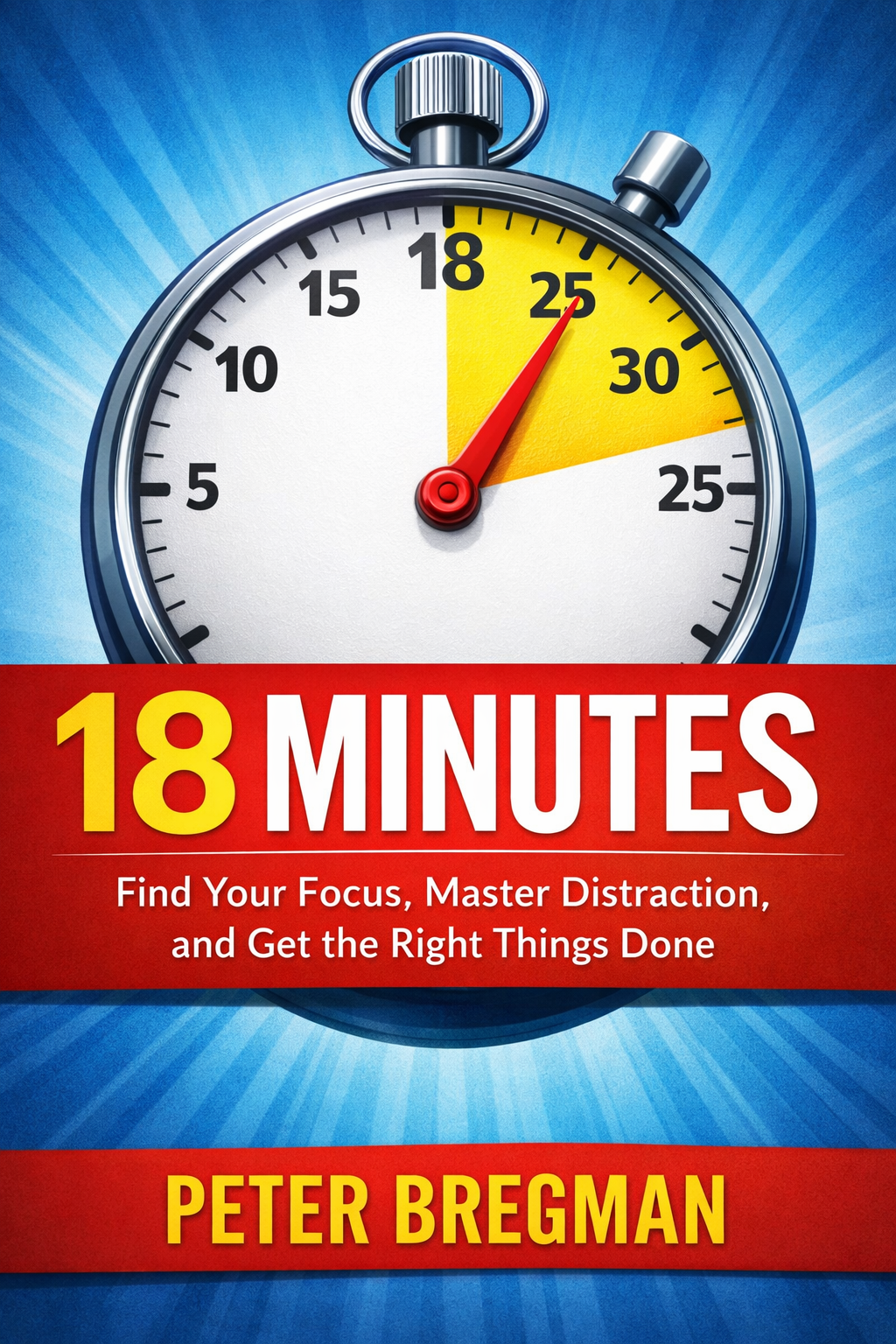
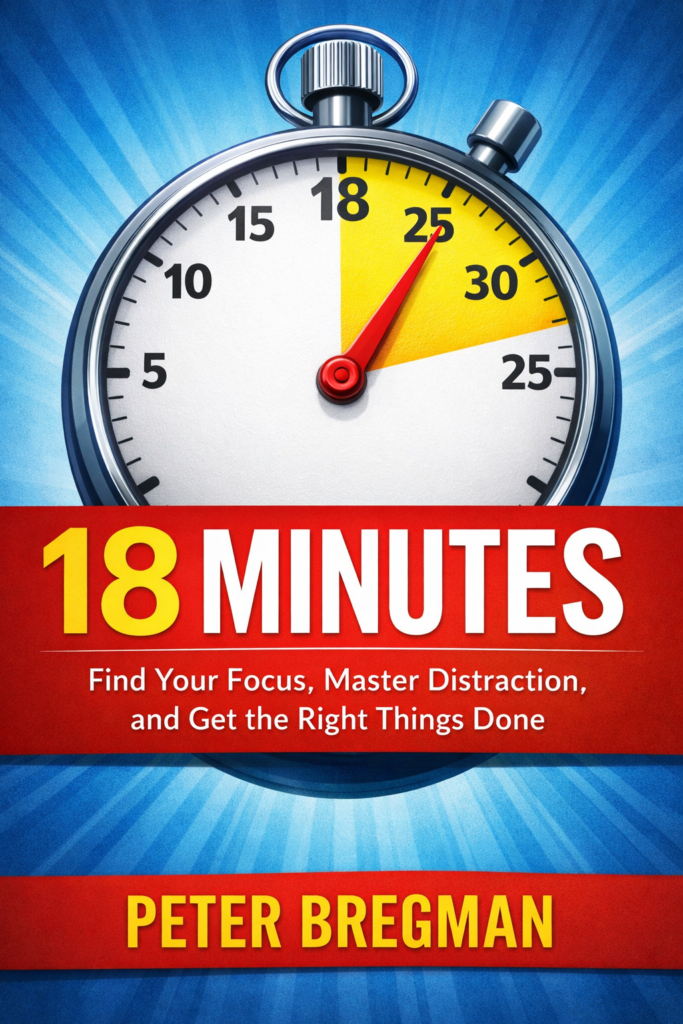
📘Summary of 18 Minutes: Reclaim Your Time, Reclaim Your Life
Imagine waking up every day knowing exactly what matters most—and actually doing it. That’s the promise of 18 Minutes, a book that’s not about doing everything, but about doing the right things with intention, clarity, and focus.
Peter Bregman starts by sharing the chaos we all know too well: inboxes overflowing, meetings draining our energy, and days ending with a haunting question—“Where did all that time go?” His answer is simple but powerful: if you pause and plan just 18 minutes a day, you can change your entire life.
🧠 The Core Idea:
You don’t need more time—you need a better system for deciding how to use your time.
🕒 The 18-Minute Plan:
- Morning (5 min): Identify 3–5 priorities that align with your annual goals.
- Hourly (1 min x 8): Set an alarm every hour. Ask: “Am I doing what matters?”
- Evening (5 min): Reflect. What worked? What didn’t? What’s next?
🎯 The Big Shifts:
- Don’t do more—do less, better.
- Success is not about finishing everything—it’s about finishing what matters.
- Saying NO is essential. Saying YES to everything is a path to burnout.
- You are the CEO of your time—own your calendar.
🛠️ Tools You’ll Learn:
- How to define your 5 annual focus areas
- How to build boundaries and defeat distractions
- How to use rituals and pauses to stay aligned
- How to restart your day at any moment after failure
💡 Final Thought:
18 Minutes is your daily reset button. A guide not just to time management, but to life management. Peter shows you how to zoom out like Google Earth, find yourself again, and land back in your life with clarity.
“You’ll never get it all done. But you can get the right things done—and that’s what matters most.”
About the Author – Peter Bregman
Peter Bregman is a globally recognized leadership coach, author, and CEO of Bregman Partners, a company that helps successful people become exceptional leaders. With over 30 years of experience advising CEOs and senior executives at top organizations including NASA, GE, and Goldman Sachs, Peter specializes in leadership development, emotional intelligence, and strategic focus. He’s a regular contributor to Harvard Business Review, Forbes, and CNN. His engaging writing style blends storytelling, psychology, and actionable insights. In 18 Minutes, he distills his approach into a practical system for managing distraction and achieving focus in work and life.
📘 Introduction: “Where Did the Day Go?”
📖 Mini-Story Recap
Molly starts a new job and is instantly overwhelmed by 385 emails. Bill zones out during a meeting and is caught off guard. Rajit plans to write a proposal but never gets started. Marie attends her high school reunion and confesses her life is just “fine,” not fulfilling. They all lost time—and never noticed when.
🧠 Key Insight / Mindset Shift
The biggest thief in our lives is not others—it’s ourselves. We often spend time on things that don’t matter, distracted by busyness. The result? We feel unaccomplished, even after a full day.
✅ Practical Steps
- Accept that you can’t do it all—focus only on what really matters.
- Interrupt your day with intention and reflection.
- Recognize that managing your time is about managing your life.
🔑 Pointers for Action
- Identify the top 5 areas you want to focus on this year.
- Use a system (like the “18-minute plan”) to keep daily focus on those.
- Reflect at the end of each day to assess if your time matched your priorities.
📘 Part 1: PAUSE — “Hover Above Your World”
Chapter: Hover Above Your World
📖 Mini-Story Recap
Peter shares how he built a successful global consulting firm—only to realize he wasn’t happy. When the business crashed, he paused, experimented, and rediscovered his true direction. That pause was his FIND ME button moment.
🧠 Key Insight / Mindset Shift
Success doesn’t equal happiness. Pausing gives clarity. When you slow down, you rise above your chaos and can finally see what matters most.
✅ Practical Steps
- Don’t rush to fix or restart everything. Step back instead.
- Look at your life from a high level, like Google Earth zooming out.
- Reconnect with your untapped potential by pausing and reflecting.
🔑 Pointers for Action
- Press your internal “FIND ME” button: pause before every major decision.
- Journal during pauses—what’s going right? What’s missing?
- Recalibrate your goals based on who you are now, not who you were.
📘 Chapter: Slowing the Spin
Reducing Your Forward Momentum
📖 Mini-Story Recap
Peter describes a moment on a stationary bike—he’s pedaling fast, but not getting anywhere. When he tries to stop, the momentum is too strong. Similarly, in life, people stay in bad relationships, failing projects, or wrong jobs simply because they’ve gone too far to back out.
🧠 Key Insight / Mindset Shift
Momentum can trap us in the wrong direction. It’s not weakness to stop—it’s wisdom. Recognizing a wrong turn and choosing to slow down is a mark of strength.
✅ Practical Steps
- Slow Down: Stop pushing so hard. If you’re unsure, listen more and argue less.
- Start Over: Ask, “If I had to choose again today, would I do this?” If the answer is no, it’s time to adjust or exit.
🔑 Pointers for Action
- Practice saying: “That’s interesting—I’ll think about it.” It buys clarity.
- Reevaluate ongoing projects or relationships as if you’re starting fresh.
- Admit mistakes early—don’t double down on the wrong path.
📘 Chapter: The Girl Who Stopped Alligator Man
The Incredible Power of a Brief Pause
📖 Mini-Story Recap
While playing in the pool, Peter’s daughter yells “Pause!” mid-chase because she swallowed water. That pause gave her space to recover—and it inspired Peter to reflect on how we rarely pause in real life before reacting.
🧠 Key Insight / Mindset Shift
A 5-second pause can prevent most regrets. Emotional reactions are automatic, but good decisions come from thoughtful delay.
✅ Practical Steps
- Use a pause before reacting emotionally—especially in emails or arguments.
- Practice deep breathing (even 1–2 seconds helps the brain switch from reaction to reason).
- Set up reminders: a sticky note on your desk that says “Pause before sending.”
🔑 Pointers for Action
- Add a mental “UNDO SEND” in real conversations.
- Train your brain with short breath breaks throughout the day.
- When you feel triggered, breathe deeply—your prefrontal cortex needs a moment to take control.
📘 Chapter: The Day Andy Left Work Early
Stopping in Order to Speed Up
📖 Mini-Story Recap
Peter and his colleague Andy had a deadline, but Andy left early for Shabbat. He returned refreshed Saturday night, and they finished the task faster than ever. Pausing didn’t delay them—it accelerated their success.
🧠 Key Insight / Mindset Shift
Rest is not a weakness—it’s fuel. Breaks help us focus, recover, and perform better. Life isn’t a sprint; it’s a series of sustainable marathons.
✅ Practical Steps
- Build breaks into your schedule: short walks, off-screens, or full rest days.
- Embrace rituals like a digital-free evening, a family dinner, or a weekly hobby.
- Recognize when fatigue is reducing your output—and step away to refuel.
🔑 Pointers for Action
- Treat your energy like a battery: charge it before it hits 0%.
- Adopt a Run-Walk routine: intense work periods followed by mini-breaks.
- Be “religious” about rest—schedule it like a non-negotiable meeting.
📘 Chapter: Frostbite in the Spring
Seeing the World As It Is, Not As You Expect It to Be
📖 Mini-Story Recap
Peter got frostbite while skiing—in spring. Why? Because he assumed the weather would be warm and ignored the forecast. His expectation blinded him to reality. The same happens in life—we confuse assumptions with truth.
🧠 Key Insight / Mindset Shift
Confirmation bias distorts decisions. We see what we want to see, not what is. To grow, we must challenge our own assumptions—even if they used to be true.
✅ Practical Steps
- Ask yourself regularly: “What has changed that I’m not seeing?”
- Get outside opinions. Others can often spot blind spots faster.
- Actively seek to disconfirm your beliefs—not reinforce them.
🔑 Pointers for Action
- Test assumptions like a scientist. Be curious, not defensive.
- Before continuing a project or belief, pause: “Would I start this today?”
- Expect change—don’t anchor decisions to the past.
📘 Chapter: Multiple Personalities Are Not a Disorder
Expanding Your View of Yourself
📖 Mini-Story Recap
Peter shares the story of employee suicides at France Telecom—people whose entire identity was tied to their job. When the job was threatened, so was their sense of self. He emphasizes the danger of being defined by just one role.
🧠 Key Insight / Mindset Shift
You are not just a worker. You are a parent, friend, artist, athlete, dreamer, spiritual being. Diversifying your identity makes you resilient, joyful, and whole.
✅ Practical Steps
- Identify 3–5 roles outside of work that bring meaning to your life.
- Schedule time weekly to nurture those identities—don’t just think it, live it.
- Don’t let one identity dominate. Integration, not imbalance, is key.
🔑 Pointers for Action
- Write a “Who am I?” list that goes beyond your job title.
- Say yes to dinner with family even if emails are pending.
- Build rituals that reinforce your other selves (artist, runner, friend).
📘 Chapter: Why We’re Fascinated with Susan Boyle
Recognizing Your Own Potential
📖 Mini-Story Recap
Susan Boyle, an unassuming 47-year-old woman, walked onto the stage of Britain’s Got Talent. The audience scoffed—until she opened her mouth and stunned the world with her angelic voice. What captivated us wasn’t just her talent, but how she defied expectations and revealed something extraordinary hidden inside.
🧠 Key Insight / Mindset Shift
We all have brilliance inside us that is often hidden—even from ourselves. Your “Susan Boyle moment” won’t come from luck. It comes from consistently nurturing your unique gifts, even if nobody notices at first.
✅ Practical Steps
- Ask: What gift or skill have I been quietly developing for years?
- Spend 30 minutes a day honing it—even if it’s unrelated to your job.
- Don’t wait for permission or the perfect audience. Practice for yourself.
🔑 Pointers for Action
- Revisit a childhood passion—what made you lose track of time?
- Stop waiting to be discovered; start discovering yourself.
- Your extraordinary is usually hiding behind the ordinary. Give it space.
📘 Chapter: Flying Upside Down
Catching Yourself Before You Crash
📖 Mini-Story Recap
Peter shares stories of pilots who unknowingly crash planes by flying them upside down—confusing their internal orientation with reality. Likewise, people push harder when something feels off, only to go in the wrong direction faster.
🧠 Key Insight / Mindset Shift
When life feels out of control, doing more of the same usually makes it worse. Instead, slow down, question your approach, and check your instruments—your values, goals, and emotional state.
✅ Practical Steps
- When overwhelmed, pause and ask: “Am I solving the right problem?”
- Check in daily with a simple question: “Am I heading where I truly want to go?”
- Use feedback from trusted people to recalibrate your direction.
🔑 Pointers for Action
- Don’t confuse effort with effectiveness.
- Schedule regular reflection sessions (weekly check-ins with yourself).
- If life feels upside down, don’t accelerate. Reorient.
📘 Chapter: Finding the One Thing You Can’t Not Do
Unlocking the Core of Who You Are
📖 Mini-Story Recap
Peter recalls how he jumped between professions—consultant, investor, rabbi, actor—trying to find where he truly belonged. Eventually, he realized he was trying to run away from failure instead of leaning into what he couldn’t not do: helping others live and work better.
🧠 Key Insight / Mindset Shift
Fulfillment doesn’t come from chasing options. It comes from discovering and committing to that one thing you can’t not do—your purpose, your calling.
✅ Practical Steps
- Reflect: What energizes you so much, you lose track of time?
- Ask others: What do you think I’m naturally gifted at?
- Find a way to do that thing every day—even in small ways.
🔑 Pointers for Action
- Make a “Can’t Not Do” list of passions that persist despite resistance.
- Align your work and goals with that central calling.
- If your job doesn’t allow it, create a side space where you can.
📘 Chapter: The Power of Ritual
Making Habits That Support Your Focus
📖 Mini-Story Recap
Peter shares how rituals (like brushing your teeth or praying) are powerful because they eliminate decision fatigue. They ground your day and build consistency. Instead of relying on motivation, successful people rely on rituals.
🧠 Key Insight / Mindset Shift
Willpower fades. Rituals are automatic. The more energy you spend choosing, the less energy you have for doing. Rituals help you stay consistent without exhaustion.
✅ Practical Steps
- Identify 1–2 key habits you want to form (e.g., journaling, walking, deep work).
- Build them into your schedule at the same time each day.
- Create triggers—like morning coffee = start writing.
🔑 Pointers for Action
- Design a morning ritual that sets the tone for your day.
- Make your evening ritual about winding down and reflection.
- Keep it simple: a ritual done daily beats a perfect one done occasionally.
📘 Chapter: PAUSE Wrap-Up
📖 Mini-Story Recap
Throughout this section, Peter uses stories of his own business failure, his daughter’s “Pause!” moment in the pool, and marathon runners who build rest into their training to show us that the first step toward getting the right things done is not rushing to do them. It’s about pausing, seeing clearly, and choosing wisely.
🧠 Key Insight / Mindset Shift
Before you race ahead, pause and look at the map. Know who you are. Know what you love. Know where you’re heading. Then act deliberately.
✅ Practical Steps
- Review your week every Sunday—ask: What worked? What didn’t?
- Reconnect with your purpose every morning: “What matters today?”
- Use the “FIND ME” moment daily to regain clarity when lost in chaos.
🔑 Pointers for Action
- Use rituals to replace reactive habits with intentional ones.
- Take micro-pauses throughout the day to breathe, reflect, and refocus.
- Keep asking: “Is this aligned with what I value most?”
✅ Part 2 — “What Is This Year About?”
This section helps you translate self-awareness into a focused, intentional yearly plan. You’ll learn how to set priorities, avoid derailers, and select five core focus areas that guide everything else.
📘 Chapter: The Lens
Choosing What Matters Most
📖 Mini-Story Recap
Peter tells the story of his own struggle to juggle a packed life, from business to family. Despite all his effort, he still felt scattered. That’s when he created The Lens—a filter to determine where to place his energy. Once he had clarity, everything else became simpler.
🧠 Key Insight / Mindset Shift
You can’t do everything. But you can do the most important things—if you know what they are. The Lens is your personal filter to decide where your time and energy should go this year.
✅ Practical Steps
- Define your yearly focus by answering these:
- What are you good at?
- What do you enjoy?
- What feels meaningful to you?
- What brings value to others?
- Narrow it down to 5 key areas where you want to invest your energy.
🔑 Pointers for Action
- Your Lens = your top 5 life priorities for the year.
- Say “yes” only to things aligned with those priorities.
- Revisit your Lens weekly to stay on track.
📘 Chapter: Creating Your Annual Focus
Build Your Five Box Year
📖 Mini-Story Recap
Peter explains how most people drift through the year responding to life rather than directing it. He uses the metaphor of a “Five Box Year”—five clearly defined areas where you’ll focus 95% of your time.
🧠 Key Insight / Mindset Shift
Focus isn’t about doing more—it’s about doing less, better. Clarity is not optional; it’s your compass.
✅ Practical Steps
- Choose five areas to guide your energy this year (e.g., Health, Family, Writing, Coaching, Spirituality).
- Write one sentence describing your goal for each area.
- Post these five focus areas somewhere visible (desk, journal, phone wallpaper).
🔑 Pointers for Action
- Avoid the “sixth box”: distractions. Eliminate or delegate them.
- Evaluate new opportunities with this question: “Does this serve one of my five focus areas?”
- If not, say no. Ruthlessly.
📘 Chapter: The Four Elements of Focus
Anchor Your Year in Passion and Strength
📖 Mini-Story Recap
Peter shares that a fulfilling year isn’t just about goals—it’s about aligning your focus with four elements: your strengths, weaknesses, joy, and meaning. Ignoring any of these can throw your year off balance.
🧠 Key Insight / Mindset Shift
Your focus must be rooted in who you are, not just what you want. Sustainable success happens when you combine joy, talent, and contribution.
✅ Practical Steps
Ask yourself these 4 questions:
- Strengths: What am I great at?
- Weaknesses: What consistently drains me?
- Joy: What lights me up?
- Meaning: What feels important to the world?
- Build your annual focus around areas where all four overlap.
🔑 Pointers for Action
- Don’t chase goals based solely on money or prestige—they won’t sustain you.
- Schedule activities each week that nourish your joy and strengths.
- Delegate or reduce time spent on tasks that tap into your weaknesses.
📘 Chapter: The Derailers
What Will Try to Knock You Off Course
📖 Mini-Story Recap
Peter reflects on how people often start the year energized, only to fizzle out. Why? They underestimate the forces working against their goals. These “derailers” show up as distractions, fear, insecurity, or pleasing others.
🧠 Key Insight / Mindset Shift
Success doesn’t just require intention—it requires protection. If you don’t manage your derailers, your derailers will manage you.
✅ Practical Steps
- Identify your top 3 derailers (e.g., social media, fear of rejection, over-commitment).
- Create “Derailer Plans” for each:
- Trigger: What causes it?
- Response: What will I do instead?
- Practice saying “no” with grace but firmness.
🔑 Pointers for Action
- Set boundaries with time-wasters and energy vampires.
- Use apps or systems to block digital distractions.
- Remind yourself: “Saying yes to everything means saying no to your priorities.”
📘 Chapter: Pulling It All Together
Create Your Personal Strategic Plan
📖 Mini-Story Recap
After laying the groundwork, Peter helps you finalize your yearly blueprint. Imagine starting the year with crystal clarity—knowing your 5 focus areas, your personal derailers, and how to manage them.
🧠 Key Insight / Mindset Shift
This is not a wish list—it’s a strategy. The clearer your map, the easier it is to stay on the right path, avoid wrong turns, and reach meaningful destinations.
✅ Practical Steps
- Write down:
- Your 5 Focus Areas for the year.
- Your Derailers and how you’ll manage them.
- A one-line mission for the year (e.g., “This year, I will focus on creating deep connections through teaching, health, and parenting.”)
- Review this weekly and adjust as needed.
🔑 Pointers for Action
- Make your strategy visual (e.g., a focus board or journal spread).
- Use it as your compass before saying “yes” to new projects.
- Check in monthly: Are you still aligned?
➡️ Part 3: What Is This Day About?
This section introduces Peter’s game-changing 18-Minute Daily Plan—the backbone of productivity that helps you turn your yearly strategy into focused daily action
📘 Chapter: The 18-Minute Plan
Your Simple Daily Ritual to Stay Focused
📖 Mini-Story Recap
Peter shares how, despite knowing his yearly goals, he kept getting distracted. He needed a daily system. That’s when he developed the 18-Minute Plan—a structured approach to make sure his daily actions matched his yearly intentions.
🧠 Key Insight / Mindset Shift
A great year is built one great day at a time. But you won’t have a great day unless you plan it intentionally. If you leave your day to chance, distractions will win.
✅ Practical Steps: The 18-Minute Plan
Break your day into 3 simple rituals:
☀️ 5 Minutes: Morning Planning
- Sit with your yearly focus.
- Choose 3–5 specific tasks that align with your 5 focus areas.
- Block time for them on your calendar.
⏰ 1 Minute Every Hour: Hourly Refocus
- Set a timer to go off once every hour.
- When it rings, ask: “Am I doing what I most need to be doing right now?”
🌙 5 Minutes: Evening Review
- Reflect: What went well? What didn’t? What will I do differently tomorrow?
- Celebrate wins—even small ones!
🔑 Pointers for Action
- Use a notepad, phone, or sticky notes to write your top 5 daily tasks.
- Let your calendar be your boss—stick to what’s scheduled.
- Don’t skip the hourly check—it’s the anchor that keeps you on course.
📘 Chapter: Your Calendar: The Single Most Powerful Daily Tool
Plan It or It Won’t Happen
📖 Mini-Story Recap
Peter learned that people don’t get things done because they don’t schedule them. Too often, your calendar reflects meetings with others but not commitments to yourself. That’s the gap the 18-Minute Plan closes.
🧠 Key Insight / Mindset Shift
If something’s not on your calendar, it’s not going to happen. Time is the most powerful currency you control—spend it with intention.
✅ Practical Steps
- Don’t use a to-do list without time blocks.
- Schedule appointments with yourself to work on key tasks.
- Protect those time blocks as if they were meetings with your CEO (because they are—you’re the CEO of your life).
🔑 Pointers for Action
- Treat calendar time as sacred.
- Don’t multi-task your most important work. Block focused time.
- Check your schedule at the start and end of the day.
📘 Chapter: Getting the Right Things Done
Avoiding the Trap of Being Busy but Ineffective
📖 Mini-Story Recap
Peter describes how people mistake activity for productivity. You can be super busy and still accomplish nothing important. He reminds us of Marie from the introduction—her life was “fine” but unfulfilled because she didn’t move the needle.
🧠 Key Insight / Mindset Shift
Don’t confuse motion with progress. Doing fewer things—but the right things—leads to a more meaningful life.
✅ Practical Steps
- Every morning, write down: “What is the ONE thing I must get done today?”
- Use the 80/20 rule: 20% of your efforts lead to 80% of your success—focus there.
- Eliminate or delegate non-core activities.
🔑 Pointers for Action
- Color-code your calendar: Focus Time vs. Admin Time vs. Meetings.
- Schedule “Protected Blocks” for your ONE most important task.
- If something doesn’t serve your 5-yearly goals, question it.
📘 Chapter: The Distraction Audit
Interrupting Interruptions Before They Derail You
📖 Mini-Story Recap
Peter shares how he tracked how often he was interrupted—and realized he was interrupting himself more than others were. Social media, email, random calls—they seemed harmless but were stealing his day.
🧠 Key Insight / Mindset Shift
You are your own biggest distraction. Mastering your day starts with mastering your attention.
✅ Practical Steps
- For one week, audit your day. Log:
- What interrupted me?
- How often?
- For how long?
- Identify repeat patterns and create Distraction Blockers.
🔑 Pointers for Action
- Set “Do Not Disturb” hours (use tools like Focus Mode, email blockers).
- Batch-check emails 2–3 times daily instead of constantly.
- Put phone in another room when working deeply.
📘 Chapter: Making Time Visible
Seeing Time Makes It Real
📖 Mini-Story Recap
Peter recalls how tracking time helped him become more productive—not by adding hours, but by making them visible. It’s easy to waste what you can’t see.
🧠 Key Insight / Mindset Shift
When you make time visible, you respect it. Invisible time gets lost. Visible time gets used.
✅ Practical Steps
- Use calendars that show time visually (e.g., Google Calendar or analog planners).
- Block color-coded time chunks—see what’s productive vs. reactive.
- Review your calendar weekly to identify wasted time and rebalance.
🔑 Pointers for Action
- Create a “Default Day Structure” with built-in focus, rest, and admin slots.
- Leave 1–2 hours unstructured daily for flexibility or overflow.
- Use alarms or reminders to switch tasks intentionally.
🗓️ End of Part 3 Summary: Your Day, Reclaimed
The 18-Minute Plan is simple but powerful. It:
- Aligns your daily actions with your yearly goals.
- Keeps you focused through hourly check-ins.
- Helps you learn from each day with evening reflection.
You now have a daily structure to consistently move forward—without burnout or distraction.
👉 Part 4 – What Is This Moment About?
Here, Peter zooms in even further—from day to moment. You’ll learn how to beat distraction in real-time, manage boundaries, and stay true to your focus when life tries to pull you off track.
Peter divides this section into three mastery zones:
- Mastering Your Initiative
- Mastering Your Boundaries
- Mastering Yourself
📘 Section 1: Mastering Your Initiative
Seizing the Moment with Purpose
📘 Chapter: Why Start?
Beat the Resistance Before It Beats You
📖 Mini-Story Recap
Peter talks about how we often procrastinate even things we want to do. Starting is the hardest part. He shares stories of people paralyzed by overthinking—waiting for the “right time” that never comes.
🧠 Key Insight / Mindset Shift
We don’t avoid starting because we’re lazy—we avoid it because starting feels risky, messy, and uncertain. But momentum only builds after you begin.
✅ Practical Steps
- Use the 2-Minute Rule: If a task will take less than 2 minutes—do it now.
- For big tasks, just start—even if it’s messy.
- Replace “I’ll start later” with “I’ll start for 5 minutes.”
🔑 Pointers for Action
- Create a “Start Ritual” (e.g., light a candle, open a fresh document, set a timer).
- Don’t wait for clarity. Start, then clarity will follow.
- Say out loud: “I don’t need to finish this—I just need to start.”
📘 Chapter: Redefining Success
Make the Moment Count, Not Just the Result
📖 Mini-Story Recap
Peter explains how we tie success to outcomes, not actions. But that sets us up for pressure, fear, and perfectionism. He learned to redefine success as taking action—regardless of outcome.
🧠 Key Insight / Mindset Shift
Shift your identity from “I succeed when I win” to “I succeed when I take action.” This removes fear and builds progress.
✅ Practical Steps
- Track actions, not just results (e.g., “I made 3 calls” instead of “I closed a deal”).
- Celebrate effort milestones: “I wrote 500 words” vs. “I finished the article.”
- Rewire your brain to reward doing, not achieving.
🔑 Pointers for Action
- Journal: “What did I take action on today?”
- Keep a habit tracker for behaviors you want to reinforce.
- Action > outcome. Show up. Every day.
📘 Section 2: Mastering Your Boundaries
Protect What Matters
📘 Chapter: Saying No With Grace
The Art of Respectful Refusal
📖 Mini-Story Recap
Peter shares how saying “yes” too often led him to burnout and resentment. Learning to say “no” changed his life—and earned him more respect.
🧠 Key Insight / Mindset Shift
Saying “no” isn’t selfish. It’s essential. Every “yes” is a “no” to something else—possibly something more important.
✅ Practical Steps
- Have go-to scripts like:
- “Thanks for thinking of me. I have to say no so I can honor my current commitments.”
- “That’s not something I can take on right now, but I appreciate the offer.”
- Practice saying no in low-risk situations first.
🔑 Pointers for Action
- Create a “Stop Doing List” alongside your To-Do list.
- Make “no” your default; say “yes” only when it’s a hell yes.
- Boundaries protect your focus, energy, and sanity.
📘 Chapter: Creating a Distraction-Free Zone
Make Space for Deep Work
📖 Mini-Story Recap
Peter once lost hours trying to multitask and constantly shifting focus. When he set up rules to protect his attention, he became drastically more productive in less time.
🧠 Key Insight / Mindset Shift
If you’re available to everyone all the time, you’re unavailable to yourself.
✅ Practical Steps
- Block “Focus Hours” with no meetings or messages.
- Use visual cues (headphones, closed door, “Do Not Disturb” signs).
- Silence phone notifications and email pings during deep work blocks.
🔑 Pointers for Action
- Schedule “distraction time” separately to check messages in batches.
- Protect your prime energy hours—don’t waste them on shallow tasks.
- Remember: focus is a choice, not a trait.
📘 Section 3: Mastering Yourself
The Inner Game of Staying on Track
📘 Chapter: Forgiving Yourself Quickly
Don’t Let One Bad Moment Ruin the Day
📖 Mini-Story Recap
Peter talks about spiraling into self-criticism after making small mistakes, and how that led to derailed days. He realized that quick self-forgiveness helped him reset faster and stay productive.
🧠 Key Insight / Mindset Shift
Perfection is a myth. Slip-ups don’t define you—your response to them does. Reset, don’t ruminate.
✅ Practical Steps
- When you slip, say: “That happened. I’m moving forward now.”
- Use small rituals to reset (deep breath, stand up, go for a walk).
- Reframe mistakes as learning—not failure.
🔑 Pointers for Action
- Don’t aim for perfect days—aim for resilient ones.
- Be kind to yourself. Progress comes through compassion, not shame.
- Write yourself a quick “compassion note” when you fall off track.
🎯 Part 4 Wrap-Up: Win the Moment, Win the Day
Mastering the moment is how you:
- Begin tasks without resistance.
- Say no to what doesn’t matter.
- Reset after distractions or mistakes.
Each moment is a chance to realign with your yearly vision and daily plan.
📘 Conclusion: Now What?
Building Momentum That Lasts
📖 Mini-Story Recap
Peter reminds us of where we began—with Molly drowning in emails, Rajit buried in busyness, and Marie feeling like life was “fine” but not fulfilling. He emphasizes that none of them lacked ability or motivation. What they lacked was a system—a consistent way to stay aligned with what matters most.
He offers a final metaphor: Google Earth. Zooming in without knowing your true location is pointless. The “FIND ME” button grounds you—just like the 18 Minutes system helps you re-center each day, each moment, each year.
🧠 Key Insight / Mindset Shift
Small daily rituals—just 18 minutes a day—can change your entire life trajectory. You don’t need more time. You need better focus and intentional action.
✅ Practical Final Steps
- Use the 18-Minute Daily Ritual:
- 5 minutes in the morning to plan your day.
- 1-minute check-in every hour.
- 5 minutes in the evening to reflect.
- Stay grounded in your 5 annual focus areas.
- Pause often: Breathe, notice, and recalibrate.
- Protect your boundaries like your success depends on it—because it does.
- Take action, even if it’s imperfect. Momentum matters more than mastery.
🔑 Pointers for Lifelong Action
- 📅 Start each week with your focus list.
- 🧭 Let your calendar reflect your values, not just obligations.
- 🚫 Say no. A lot. So you can say yes to the right things.
- 📌 Keep your system visible—use post-its, alarms, journals, whatever works.
- 🧘♂️ And remember: when you lose focus (because you will), don’t panic. Just… press the FIND ME button again.
🏁 FINAL MESSAGE FROM THE BOOK
“I wrote this book so that you—like Molly, Rajit, Bill, and Marie—could look back at your day, your year, and your life, and say: I used my time well.”
The goal isn’t to get everything done.
It’s to get the right things done—and enjoy doing them.
🧰 YOUR 18-MINUTE LIFE SYSTEM — Quick Recap
🎯 Your Focus:
- Choose 5 focus areas for the year.
- Filter all decisions through these.
📅 Your Day:
- 18-Minute Ritual (5 + 1×8 + 5).
- Schedule everything important.
- Track action, not just outcome.
⚔️ Your Moments:
- Say no often and gracefully.
- Block distractions proactively.
- Forgive yourself and keep moving.
About Author