Summary
Chapter I: Five Percent of the People Manipulate the Other Ninety-Five Percent
📖 Mini-story recap:
Sparkman, curious about why some people always seem to get what they want, dives into the gritty world of street-smart manipulators. He shares how he learned from master con artists, drunks, and hustlers—not from textbooks or professors. These mentors weren’t evil criminals, but charming rogues who mastered the art of persuasion through survival.
🧠 Key insight / mindset shift:
Manipulation is less about deception and more about deeply understanding human nature. Most people act on instinct and emotion, not logic. If you understand that, you’re already ahead of 95% of the world.
✅ Exact instructions Tim gives (practical steps):
- Watch how real manipulators act, not how people theorize in books.
- Learn by observation, not by idealism.
- Don’t worry about morality—worry about effectiveness (but act responsibly).
🔑 Pointers for action:
- Look for manipulators in everyday life. Observe their words, tone, and confidence.
- Study what works, not what sounds good.
- Remember: people can only be manipulated through their own predictable behaviors.
📖 Chapter II: Tactic 1 – Character Types to Watch Out For
📖 Mini-story recap:
Sparkman gets tricked by his own roommates—expert con artists—over and over. Each time, they reassure him with trust-building lines like, “You know I’d never cheat you.” These were their tells.
🧠 Key insight / mindset shift:
People who say “trust me” often shouldn’t be trusted. Liars always “protest too much.”
✅ Exact instructions:
- Never trust someone who keeps reminding you they’re trustworthy.
- If someone lies to others in front of you, they’ll lie to you too.
- Beware of people who used to be rich but “lost it”—it’s often bait for your money.
- Avoid people who focus on petty details while ignoring bigger issues—they’re incompetent.
🔑 Pointers for action:
- Always verify stories—look for inconsistencies.
- Trust actions, not words.
- Walk away from people who emphasize trivial rules and overlook big outcomes.
📖 Chapter III: Tactic 2 – How to Make a Slave Out of a Person
📖 Mini-story recap:
Sparkman’s date confesses she’s addicted to a man who hits her—but also charms her with intense affection. He realizes this abusive man is unknowingly using intermittent reinforcement, a psychological principle that makes people crave attention more desperately when it’s only given sometimes.
🧠 Key insight / mindset shift:
People don’t appreciate constant kindness. They crave what they can’t have—and when affection is unpredictable, they become emotionally addicted.
✅ Exact instructions:
- Reinforce someone (with praise, attention, rewards) most of the time—but not always.
- Pull away when they take you for granted.
- Then return with charm. Repeat.
🔑 Pointers for action:
- Be warm, but occasionally distant, to create emotional pull.
- Use this technique only with people you know value your attention.
- This works in love and in business.
📖 Chapter IV: Tactic 3 – The World is Rife with Favoritism
📖 Mini-story recap:
Sparkman notices the truth: people don’t get ahead through merit alone. They succeed by becoming likable and favored by those in power. The smile, he realizes, can be more powerful than competence.
🧠 Key insight / mindset shift:
Favoritism isn’t unfair—it’s inevitable. People help those they like. You can fight it, or you can use it.
✅ Exact instructions:
- Smile naturally—while you speak and afterward. Don’t force it.
- Ask people about themselves, especially their careers. Listen deeply.
- Let others know their advice helped you—it flatters them deeply.
🔑 Pointers for action:
- Flatter subtly. Never overtly.
- Be curious about others’ lives and passions.
- People remember how you make them feel—warmth wins deals.
📖 Chapter V: Tactic 4 – The Essence of Manipulation: “I Don’t Need You. You Need Me.”
📖 Mini-story recap:
Hardy, the author’s manipulative roommate, had a mantra: “The one who can walk away has the power.” Whether selling land or charming women, Hardy always acted like he didn’t need anyone—and that made everyone want him more.
🧠 Key insight / mindset shift:
Power comes from perceived independence. The less you need someone, the more they want you.
✅ Exact instructions:
- Never show desperation—in business, relationships, or sales.
- Act like you have other options, even if you don’t.
- Create the illusion that you’re choosing them—not chasing them.
🔑 Pointers for action:
- Practice detachment. Train yourself not to chase outcomes.
- Be willing to walk away—and mean it.
- Always ask: “How can I position myself as the prize here?”
📖 Chapter VI: Tactic 5 – And the Meek Shall Manipulate the Earth
📖 Mini-story recap:
The author, fresh out of college, armed with a shiny new degree and brimming confidence, was convinced he was smart enough to take on the world. That is, until he met a street-savvy Black man who sold everything from vacuum cleaners to cars and lived lavishly. This man said, “It’s easier to outsmart someone who thinks he knows it all.” That one sentence cracked the author’s ego like glass. Add to that a millionaire boss and a humble mechanic who both claimed they were “still learning,” and Sparkman began to see the wisdom of humility.
🧠 Key insight / mindset shift:
Pretending to know less than you do gives you leverage. The truly smart stay teachable. The more others think you’re naïve, the more they drop their guard—and that’s when the real manipulation begins.
✅ Exact instructions:
- Never show off how much you know.
- Nod, listen, and let others feel superior.
- Use humility as a mask—it disarms egos and invites useful information.
🔑 Pointers for action:
- In conversations, ask more than you tell.
- Play dumb when it serves your interest.
- Use “I don’t know much about that…” as a strategic opener.
📖 Chapter VII: Tactic 6 – How to Pick a Person Apart and Discover His Real Motives
📖 Mini-story recap:
When Sparkman suspects his girlfriend Lana might still be emotionally attached to her ex, he doesn’t ask directly. Instead, he uses a trick from Hardy, the master manipulator: he surprises her with a blunt question and watches her eyes in the first three seconds. Her eyes flinch, giving away the truth—long before her words lie.
🧠 Key insight / mindset shift:
People can control their words, but not their instant emotional reactions. The eyes truly are the window to the soul—if you know how to read them in real-time.
✅ Exact instructions:
- Ask a direct question that surprises them.
- Watch their face—especially the eyes and upper cheeks—for 3 seconds.
- Ignore the verbal answer if the physical reaction contradicts it.
- Follow up with: “Is there any other reason…?” to uncover hidden objections.
🔑 Pointers for action:
- Practice facial reading in casual conversations.
- Learn to trust your gut over polite answers.
- Use this tactic in negotiations, dates, and even job interviews.
📖 Chapter VIII: Tactic 7 – The Guernsey vs. the Brahma
📖 Mini-story recap:
A farmer observes two orphaned calves. The Guernsey gives up after rejection and dies. The Brahma, stubborn and relentless, keeps pushing until it’s nursing comfortably. Sparkman uses this story to draw a line between “positive thinking” and real persistence. He argues that a sunny attitude might help in a football game, but it won’t get you through a year-long struggle—persistence will.
🧠 Key insight / mindset shift:
Persistence wins, not empty optimism. Real confidence is built on survival, not slogans. When success requires pushing through hardship, attitude won’t help—but stubborn effort will.
✅ Exact instructions:
- Decide what you want and don’t stop until you get it.
- Mentally accept failure, then fight like hell to avoid it.
- Learn from every failure through self-critique, not blaming others.
🔑 Pointers for action:
- Ask yourself: “What’s the worst that could happen?” Accept it.
- Then go all-in. Take risks. Act free of fear.
- View failure as feedback, not finality.
📖 Chapter IX: Tactic 8 – How to Avoid Being Taken in Financial Dealings
📖 Mini-story recap:
Sparkman gets kicked out of his own apartment, scammed out of $800 by a roommate. But his anger becomes education. Hardy, his mentor, tells him the golden rule: “Whoever holds the money holds the power.” Sparkman then describes con games involving loans, checks in the mail, and shady repair shops—all teaching him one thing: control the cash.
🧠 Key insight / mindset shift:
In money matters, control is everything. Good intentions mean nothing when money’s involved—only leverage does.
✅ Exact instructions:
- Never give money upfront until the deal is complete.
- Always agree on price before accepting services.
- Pick up checks in person—don’t trust “it’s in the mail.”
- Mentally treat personal loans as gifts—you likely won’t see them again.
🔑 Pointers for action:
- Ask prices in advance—even if it feels awkward.
- Withhold payment as your only leverage.
- Don’t let politeness bankrupt you.
📖 Chapter X: Tactic 9 – Manipulating a Person’s Thinking
📖 Mini-story recap:
While trying to impress a group of women, Sparkman suggests a movie. They scoff—until another man makes the same suggestion, and suddenly it’s a brilliant idea. That’s when he learns: it’s not the message, it’s the messenger. People only let themselves be influenced by those they already like and respect.
🧠 Key insight / mindset shift:
You can’t change a stranger’s mind—but you can influence a friend’s. Manipulation works best inside relationships, not outside of them.
✅ Exact instructions:
- Only try to influence people who already like and respect you.
- Don’t waste energy arguing with enemies—you’ll only deepen their resistance.
- Build rapport before persuasion.
🔑 Pointers for action:
- Invest in relationships before asking for favors or persuasion.
- If someone dislikes you, don’t try to win them over with logic—change the relationship first.
- Influence flows from connection, not correctness.
📖 Chapter XI: Tactic 10 – Win Ninety-Five Percent of Your Arguments
📖 Mini-story recap:
Sparkman finds himself trapped in an emotional war with his roommate Rhonda. Arguments fly over everything—dates, feminism, room space. He sees himself as a great debater… until he realizes he’s losing peace of mind and time. That’s when a profound shift occurs: winning isn’t about convincing the other person—you win by refusing to argue in the first place.
🧠 Key insight / mindset shift:
Don’t fight battles that don’t affect your vital interests. Most arguments are ego traps. Walk away, and you win by default.
✅ Exact instructions:
- Rule 1: Only try to manipulate friends—people who already like you.
- Rule 2: Avoid arguments that don’t touch your vital interests (money, well-being, or emotional stability).
- Focus on persuasion, not debates.
🔑 Pointers for action:
- Let go of needing to be right.
- Ask: “Will winning this argument improve my life?”
- If not, skip it—protect your emotional energy.
📖 Chapter XII: Tactic 11 – Manipulate a Person Against His Will and Make Him Like It
📖 Mini-story recap:
Over drinks and laughs, Sparkman charms a date named Stephanie. As the night unfolds, he tests a method he calls Unargue—a non-confrontational technique taught by streetwise manipulators. He doesn’t fight. He befriends, aligns, and then guides her choices subtly. The outcome? She says yes to his plan without realizing she’s been nudged.
🧠 Key insight / mindset shift:
People don’t change when they’re argued with. But they follow when they feel seen, heard, and liked. Influence flows through similarity and connection.
✅ Exact instructions (The Unargue Technique):
- Become their friend.
- Find common ground (soulmate tactic).
- Say your piece briefly.
- Use silence as pressure.
- Assume a “yes” if no objection comes.
- Lead with confidence.
🔑 Pointers for action:
- Don’t argue—agree, then lead.
- Use silence to create tension.
- People move when they feel like it was their idea.
📖 Chapter XIII: Tactic 12 – A Little Pressure Has Its Place
📖 Mini-story recap:
Sparkman is close to closing a deal—both romantic and business. His target is undecided. That’s when he uses “positive pressure.” He assumes a “yes” and starts taking action. The key isn’t force—it’s acting as if the person has already agreed. They usually follow.
🧠 Key insight / mindset shift:
When people are indecisive, a confident nudge can push them over the edge—especially if they trust you.
✅ Exact instructions:
- Wait for a “yes-no” mental state.
- Then either:
- Use silence to build tension.
- Or assume agreement and act (“I’ll go book the room”).
- Use this in negotiation, sales, or relationships.
🔑 Pointers for action:
- Don’t pressure early—wait for indecision.
- Learn to recognize hesitation—it’s your cue.
- Practice silent pauses and watch what people do.
📖 Chapter XIV: Tactic 13 – If All Else Fails, Try the Dirty Way
📖 Mini-story recap:
Hardy, the veteran manipulator, is stuck with a bedroom set no one wants. But he notices the man’s much younger girlfriend likes it. Hardy starts charming her—not him. She convinces the man to buy it. Sparkman watches the sale close, stunned. The power of indirect manipulation hits him like a truck.
🧠 Key insight / mindset shift:
If you can’t persuade someone directly, influence someone who influences them.
✅ Exact instructions:
- Back off when direct tactics fail.
- Find someone the target listens to—friends, family, lovers.
- Influence them to influence your target.
🔑 Pointers for action:
- Think in circles: who does your target trust?
- Build alliances with influencers.
- Use admiration and indirect social proof to shift perception.
📖 Chapter XV: Tactic 14 – How to Squelch Ingratitude Before It Starts
📖 Mini-story recap:
Sparkman, trying to help people, gets burned—badly. Hardy tries to seduce his friend after Sparkman helps him. Another friend kicks him out at midnight after Sparkman funds his business. Furious, Sparkman learns that big favors breed big resentment. He then develops a formula to prevent it.
🧠 Key insight / mindset shift:
Ingratitude isn’t personal—it’s human nature reacting to unrepayable debt. People hate feeling beholden.
✅ Exact instructions:
- Never give 100%—let them invest something.
- Use intermittent reinforcement: give help sometimes, not always.
- Collect repayment in advance (e.g., collateral or contribution).
🔑 Pointers for action:
- Ask for a small price even when giving a big gift.
- Don’t expect gratitude—design your giving to prevent resentment.
- If you loan money, treat it as a gift—or get something in return beforehand.
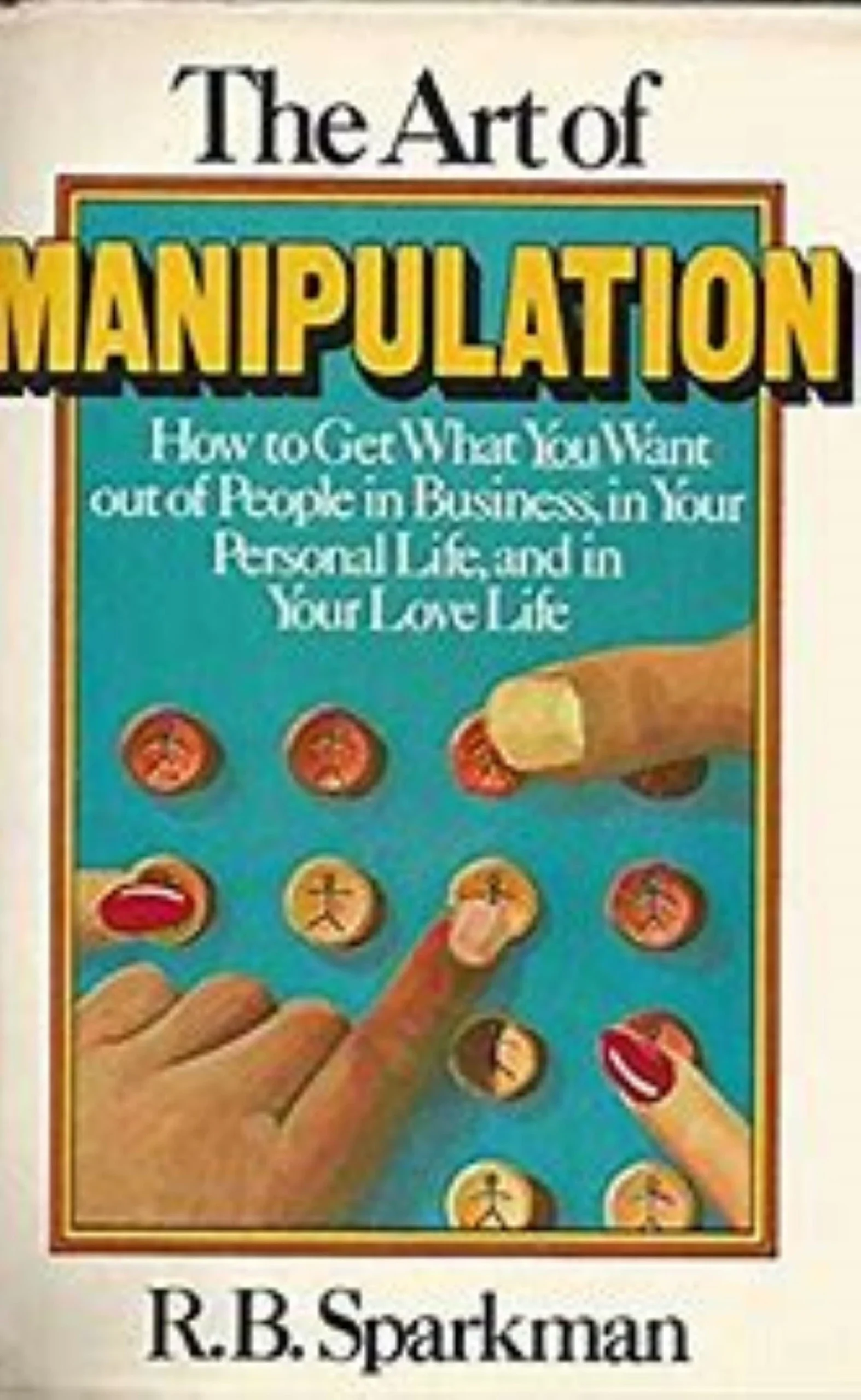
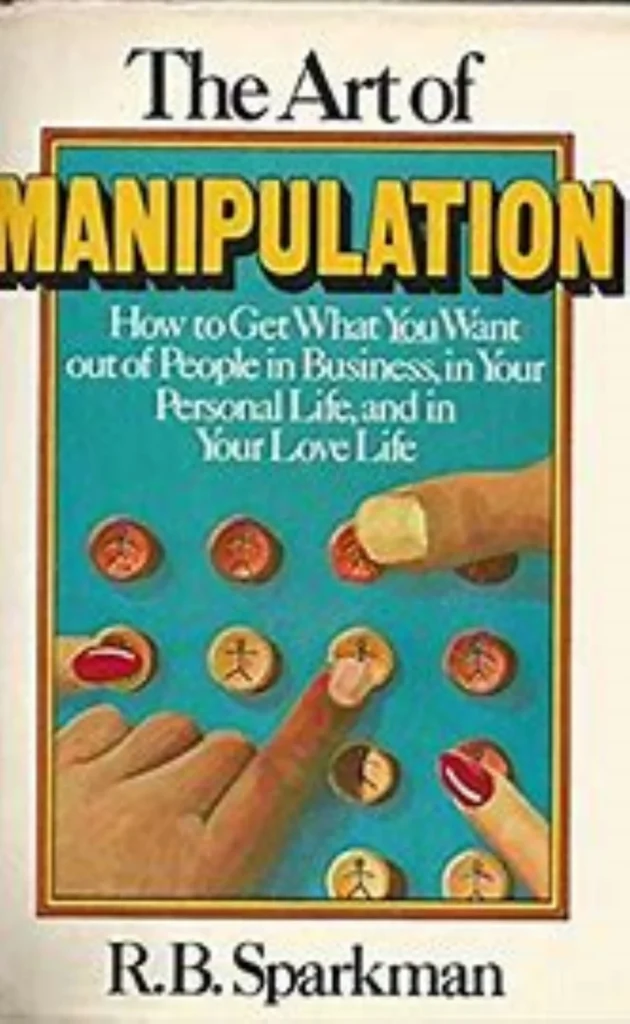
📘 The Art of Manipulation by R. B. Sparkman
Chapter XVI – What You Get Out of Using People for Your Own Selfish Ends
📖 Mini-story recap:
As the book comes to a close, Sparkman gets honest—maybe even vulnerable. He confesses that the very con artists who taught him the game also unintentionally revealed its darker cost. These men had charm, tactics, and power over others. But what they didn’t have? Friends. Wives. Peace. They used people like disposable napkins, and ended up lonely, miserable, and drunk. Sparkman compares the power of manipulation to karate: just because you can hit someone doesn’t mean you should. The skill is neutral—the outcome depends on you.
He recounts how even the most clever manipulators tried to justify selfishness. They’d say things like “I only hurt people who deserve it,” or “I never cheat friends—unless they cross me.” But Sparkman saw the truth: once you start using people, it becomes a habit. Eventually, you treat everyone—including friends—the same way. In trying to control others, you lose control over your own moral compass.
🧠 Key insight / mindset shift:
Manipulation is a tool, not a lifestyle. If you use it selfishly, you will end up isolated and unhappy. If you use it wisely—to protect yourself or improve relationships—you’ll gain not just influence, but peace of mind.
✅ Exact instructions:
- Use these tactics to defend yourself or get what you need, not to harm or dominate others.
- Don’t try to “selectively” use people—your behavior bleeds into all relationships.
- Apply the Golden Rule: Treat others as you’d want to be treated, even while being persuasive.
🔑 Pointers for action:
- Reflect before using a manipulative tactic: “Will this make my life better long-term?”
- If you’re tempted to exploit someone, ask: “Would I want someone to do this to me?”
- Use your skills to build trust and influence, not destroy it.
💡 Final Thought:
Sparkman doesn’t ask you to become a saint. But he warns you: becoming a smart manipulator without becoming a wise human is a losing game. The real art is knowing when to use influence—and when to let it go.
About Author