Summary
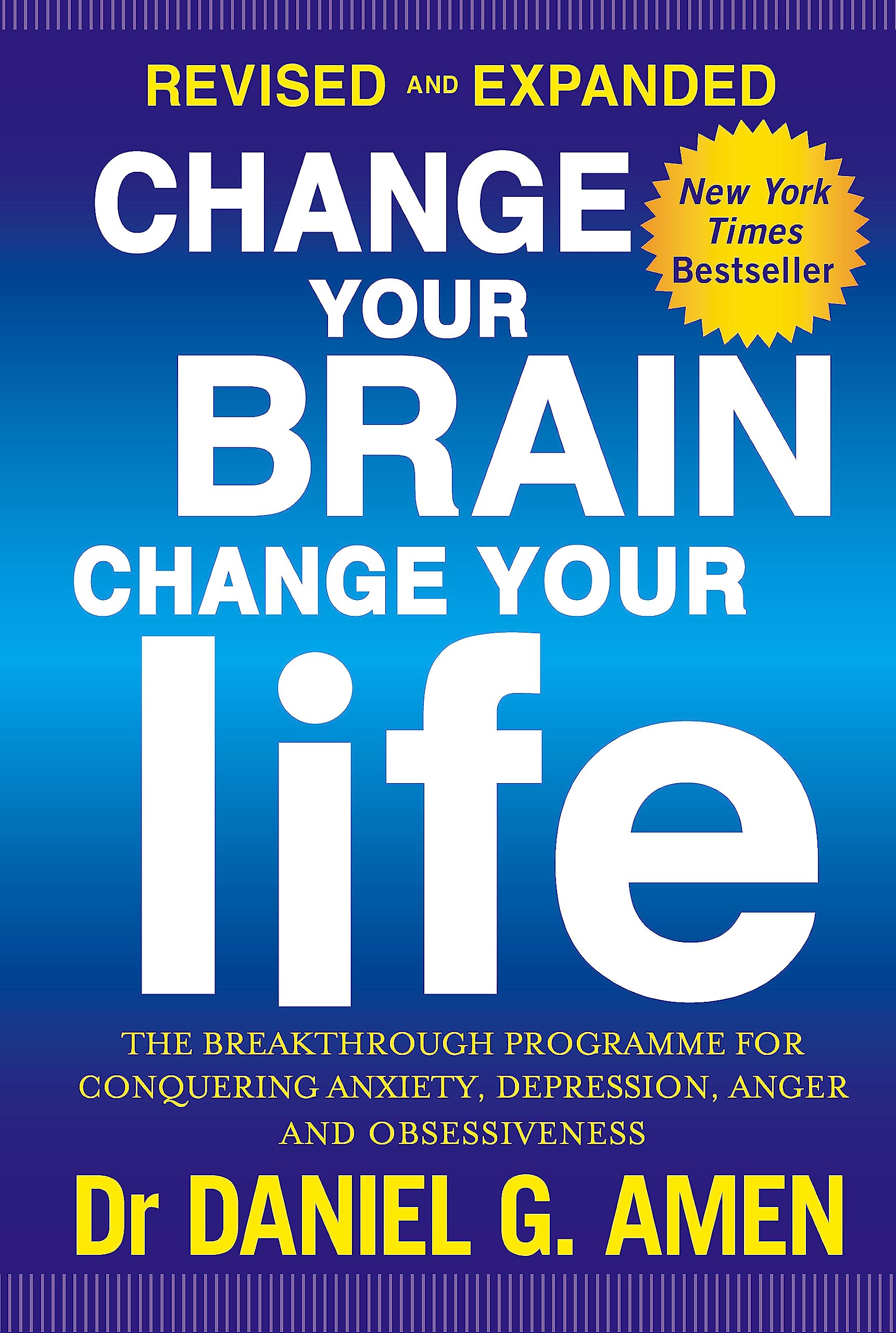
Overall Summary of the Book
Dr. Amen introduces five core brain systems and how they influence your life:
- The Prefrontal Cortex: Focus, decision-making, impulse control.
- The Anterior Cingulate Gyrus: Flexibility vs. obsessiveness.
- The Deep Limbic System: Mood and emotional tone.
- The Basal Ganglia: Anxiety and tension regulation.
- The Temporal Lobes: Memory, learning, and temper control.
He also reveals 7 types of ADD, the toxic power of Automatic Negative Thoughts (ANTs), and a brain-personalized plan for supplements, nutrition, exercise, and mindset rewiring.
The book doesn’t just point out problems—it gives you the tools to change:
✅ Practical checklists
✅ Personalized brain-type quizzes
✅ Nutrition, sleep, and supplement strategies
✅ Mental exercises and 12-month habit plans
✅ Tools for improving relationships, focus, and even weight
You’ll walk away with one simple truth burned into your mind:
“When you change your brain, you truly change your life.”
Whether you want to break a bad habit, heal trauma, increase energy, or avoid mental decline, this book is a user’s manual for your most powerful tool—your brain.
Chapter 1: Change Your Brain, Change Your Life
📖 Mini-Story Recap:
Imagine a man named Jim who had uncontrollable outbursts of anger. It cost him his job, his marriage, and nearly his health. But what if Jim’s issue wasn’t just emotional—it was biological? When Dr. Amen scanned Jim’s brain, he discovered overactivity in his limbic system, the brain’s emotional center. With a mix of therapy, supplements, and brain-focused lifestyle changes, Jim slowly reclaimed his calm, his relationships, and his career.
Jim didn’t just change his mind—he changed his brain.
🧠 Key Insight / Mindset Shift:
“You’re not stuck with the brain you have.”
Mental health isn’t just about willpower or positive thinking. It’s deeply connected to your brain’s health and structure. Fix the brain—and your life changes too.
Dr. Amen introduces a revolutionary idea: most psychiatric issues are actually brain issues in disguise. Using brain imaging (SPECT scans), we can finally “see” the brain in action—and target treatments that truly help.
✅ Exact Instructions Tim (Dr. Amen) Gives:
- Start thinking in brain terms. When you struggle emotionally, don’t just ask, “What’s wrong with me?”—ask, “What’s happening in my brain?”
- Get educated. Understanding your own brain type can help you choose better habits, diets, and strategies.
- Seek solutions that heal the brain—not just suppress symptoms. This includes nutrition, supplements, exercise, and cognitive-behavioral strategies.
🔑 Pointers for Action:
- 🧠 Stop blaming yourself for mood, focus, or anger issues. Think brain first.
- 📷 Consider brain imaging if you’ve had long-term, resistant emotional issues.
- 🥗 Treat your brain kindly: prioritize sleep, clean food, omega-3s, and stress reduction.
- 🏃 Exercise regularly—it boosts blood flow and brain repair.
Chapter 2: How Your Brain Works
📖 Mini-Story Recap:
Meet Sarah, a talented lawyer who suddenly found herself unable to concentrate, forgetting key facts in court. She thought she was burning out or going crazy. But after a brain scan, Dr. Amen found decreased activity in her prefrontal cortex—the brain’s CEO. It wasn’t about stress—it was about a struggling brain system. With targeted brain strategies, Sarah’s performance came back stronger than ever.
🧠 Key Insight / Mindset Shift:
“Each part of your brain plays a role in who you are.”
Dr. Amen breaks the brain into key parts:
- Prefrontal Cortex (PFC): Focus, planning, judgment.
- Anterior Cingulate Gyrus (ACG): Flexibility vs. obsession.
- Deep Limbic System: Mood and emotional tone.
- Basal Ganglia: Anxiety and motivation.
- Temporal Lobes: Memory, learning, temper.
Knowing which part is imbalanced helps solve emotional and behavioral problems more precisely.
✅ Exact Instructions:
- Learn your brain type. Use Amen’s tools (brain type questionnaires or scans).
- Match solutions to regions. For example, focus issues? Strengthen your PFC.
- Track symptoms. Notice patterns tied to focus, moods, motivation, or memory.
🔑 Pointers for Action:
- 🔍 Start observing yourself: are your issues with focus, memory, mood, or control?
- 🗺 Identify which brain region might be involved—then act accordingly.
- 💪 Don’t treat the symptom, treat the source—your brain’s region-specific activity.
Chapter 3: The Brain Imaging Revolution
📖 Mini-Story Recap:
Dr. Amen describes his pivotal moment: a young boy named Andrew, adopted from a troubled home, showed aggressive and violent behavior. Traditional therapy failed. But a brain scan revealed damage in his temporal lobes from past trauma. With proper care, Andrew began to heal.
This inspired Dr. Amen’s life mission: see the brain, heal the brain.
🧠 Key Insight / Mindset Shift:
“You can’t fix what you can’t see.”
The brain is the only organ that psychiatrists don’t normally look at. SPECT scans show blood flow and activity levels—revealing underlying issues like injury, overactivity, or underactivation. This can change diagnoses and treatment completely.
✅ Exact Instructions:
- Consider SPECT if you’ve tried everything else.
- Use scans to personalize care. Don’t settle for “one-size-fits-all” diagnoses.
- Recognize that mental symptoms may have a physical source.
🔑 Pointers for Action:
- 📸 Understand what SPECT scans can show (activity, blood flow, injury).
- 🧠 Respect your brain health like heart or liver health.
- 🧬 If medications or therapies aren’t working, consider imaging for deeper answers.
Chapter 4: Brain System 1 – The Prefrontal Cortex (The Boss)
📖 Mini-Story Recap:
Kevin couldn’t sit still, kept getting fired, and forgot important tasks. Labeled lazy or difficult, he was losing hope. A brain scan showed underactivity in his prefrontal cortex (PFC). Dr. Amen explains this region is like the brain’s CEO. With stimulation techniques, diet changes, and behavioral therapy, Kevin reclaimed his focus—and life.
🧠 Key Insight / Mindset Shift:
“Focus and follow-through come from a well-tuned prefrontal cortex.”
When the PFC is underactive, especially in ADD/ADHD, people struggle with focus, impulse control, and planning—even if they’re intelligent and motivated.
✅ Exact Instructions:
- Activate the PFC with structure and stimulation.
- Use protein-rich breakfasts and green tea to boost dopamine.
- Avoid sugar and simple carbs—they crash the PFC.
- Exercise daily—a top stimulator of PFC activity.
🔑 Pointers for Action:
- 🧃 Start your day with high-protein meals, not sugar.
- 🗂 Use planners, reminders, and external structure to support weak executive function.
- 🎯 Play focus-enhancing games like chess or memory tasks.
- 💊 Explore natural dopamine boosters (tyrosine, Rhodiola, or consult doctor for meds).
Chapter 5: Brain System 2 – The Anterior Cingulate Gyrus (The Gear Shifter)
📖 Mini-Story Recap:
Meet Lily, a bright student who was stuck in mental loops. If something went wrong, she obsessed over it for days. She couldn’t move on. After her brain scan, Dr. Amen found overactivity in the anterior cingulate gyrus (ACG)—the brain’s “gear shifter.” It controls how easily we shift attention and thoughts. Lily wasn’t stubborn—her brain was stuck.
With serotonin-enhancing strategies, she finally found peace.
🧠 Key Insight / Mindset Shift:
“Being stuck isn’t a personality flaw—it’s often a brain imbalance.”
People with overactive ACG struggle with obsessions, compulsions, rigid thinking, and anxiety. Treating it like a character flaw worsens the problem. Targeted brain-based approaches work better.
✅ Exact Instructions:
- Increase serotonin naturally (try 5-HTP, saffron, exercise).
- Practice cognitive flexibility—reframe thoughts and switch mental focus.
- Avoid caffeine and sugar, which aggravate overactivity.
🔑 Pointers for Action:
- 🌀 Interrupt obsessive loops with deep breathing or mindfulness.
- 🌞 Get morning sun or light therapy to boost serotonin.
- 📵 Avoid “mental clutter”: social media and multitasking worsen rigidity.
- 🧠 Try journaling or talk therapy to untangle looping thoughts.
Chapter 6: Brain System 3 – The Deep Limbic System (The Emotional Filter)
📖 Mini-Story Recap:
Mark had a dark cloud hanging over him. He wasn’t just sad—he was hopeless, withdrawn, and fatigued. But his life circumstances weren’t bad. Dr. Amen discovered that his deep limbic system (the brain’s mood center) was overactive. Once addressed, the fog lifted—and Mark saw life with new eyes.
🧠 Key Insight / Mindset Shift:
“Depression isn’t always from life—it can be from your brain.”
The limbic system acts as an emotional filter. When it’s overactive, everything feels negative—even if it’s not. Fixing this brain region can radically lift mood and motivation.
✅ Exact Instructions:
- Use mood-brightening strategies: gratitude journaling, exercise, and connection.
- Take targeted supplements like omega-3s, SAMe, or vitamin D.
- Reframe negative thoughts—don’t believe everything you feel.
🔑 Pointers for Action:
- ✍️ Keep a daily gratitude list—it rewires the limbic system for optimism.
- 🤗 Connect socially—even short conversations boost mood.
- 🎧 Listen to uplifting music or spiritual content daily.
- 💤 Prioritize restful sleep—it stabilizes limbic overactivity.
Chapter 7: Brain System 4 – The Basal Ganglia (The Anxiety Center)
📖 Mini-Story Recap:
Priya couldn’t relax. She worried constantly—about everything. Her heart raced, sleep suffered, and tension consumed her. But her brain scan told the real story: overactive basal ganglia, the anxiety switchboard of the brain. With calming strategies and the right tools, she slowly regained peace and confidence.
🧠 Key Insight / Mindset Shift:
“Anxiety isn’t weakness. It’s often brain hyperactivity.”
This region controls anxiety, tension, and fear responses. Overactivity here can cause irrational worry, panic, or even physical symptoms. The good news? It’s manageable once identified.
✅ Exact Instructions:
- Use natural anti-anxiety aids: magnesium, ashwagandha, or GABA.
- Practice diaphragmatic breathing—deep and slow.
- Avoid stimulating substances like caffeine and processed sugar.
🔑 Pointers for Action:
- 🧘♀️ Do daily calm-down rituals: meditation, yoga, or quiet walks.
- 📵 Reduce screen time before bed—it overstimulates the anxious brain.
- 🧂 Eat magnesium-rich foods: pumpkin seeds, leafy greens, avocados.
- 💨 Try the “4-7-8” breath: inhale 4 sec, hold 7, exhale 8—repeat 4 times.
Chapter 8: Brain System 5 – The Temporal Lobes (The Memory and Mood Center)
📖 Mini-Story Recap:
Jason was aggressive, moody, and forgetful. One minute he’d be calm, the next—exploding. His relationships were falling apart. What he didn’t know? His temporal lobes, responsible for memory, mood stability, and learning, weren’t working right—likely due to a childhood injury. Once the brain region was treated with targeted care, Jason transformed from a ticking time bomb to a thoughtful communicator.
🧠 Key Insight / Mindset Shift:
“Sometimes emotional storms are caused by physical injuries to the brain.”
The temporal lobes influence memory, emotional stability, language, and behavior. Issues here can lead to temper problems, learning challenges, and even misdiagnosed psychiatric disorders.
✅ Exact Instructions:
- Get evaluated for past head trauma—even mild concussions.
- Try natural support like GABA, omega-3s, and phosphatidylserine.
- Engage in memory-boosting exercises—crosswords, reading, brain games.
🔑 Pointers for Action:
- 🤕 If you’ve ever had a head injury—even decades ago—don’t ignore it.
- 🧠 Play brain-enhancing games for at least 10 minutes daily.
- 🚫 Avoid alcohol and smoking—they directly damage the temporal lobes.
- 🎧 Use music therapy to calm aggression and enhance memory.
Chapter 9: The Brain Warriors’ Way to Rescue Your Brain
📖 Mini-Story Recap:
Carla and Tom were two people stuck in survival mode—burnt out, foggy, tired. Dr. Amen calls such people “brain zombies.” But when they adopted the Brain Warrior lifestyle, everything changed. Through small, daily, brain-supporting rituals, they moved from survival to strength.
This chapter introduces the Brain Warrior’s Way—a mindset of active brain protection and repair.
🧠 Key Insight / Mindset Shift:
“You’re in a war for the health of your brain. And you must fight like a warrior.”
The world is full of brain-damaging foods, habits, and stress. You need to be intentional, not passive, about your brain’s protection and power.
✅ Exact Instructions:
- Eat like a warrior: plant-heavy, low-glycemic, high in omega-3s.
- Move like a warrior: exercise daily to enhance blood flow.
- Think like a warrior: challenge negative thoughts with logic and positivity.
- Rest like a warrior: prioritize 7–8 hours of quality sleep.
🔑 Pointers for Action:
- 🛡 Be aware of your “brain enemies”: sugar, toxins, stress, lack of purpose.
- 🥗 Replace “fake food” with real, whole, colorful meals.
- 🔄 Reframe every negative thought with three positive truths.
- 🧍♂️ Stand up and move every hour—brain warriors don’t sit for too long.
Chapter 10: Know Your Brain Type
📖 Mini-Story Recap:
Dr. Amen met five different people with depression—but their brains looked completely different. One had an underactive PFC, another had an overactive limbic system, and yet another had low activity in the basal ganglia. Same symptom, different brain types.
This led him to develop the Amen Brain Typing System—a revolutionary way to personalize mental health care.
🧠 Key Insight / Mindset Shift:
“Symptoms don’t tell the full story—brain types do.”
Rather than guessing, Dr. Amen uses brain scans to identify five major brain types and several subtypes. This allows for customized solutions—not cookie-cutter advice.
✅ Exact Instructions:
- Take the Brain Type Quiz (found in Amen’s resources or online).
- Match treatment to type: Some types need stimulation, others need calming.
- Avoid “one pill for all” thinking—it doesn’t work with complex brains.
🔑 Pointers for Action:
- 🧩 Don’t compare your brain needs to others’—what energizes them might exhaust you.
- 🎯 Get specific: Learn your brain type to target your food, supplements, and habits.
- 🧪 Consider testing (like SPECT) if symptoms persist despite your efforts.
- 🧠 Personalize your path to healing—one-size-fits-none in brain health.
Chapter 11: Healing ADD – A New Look at Attention Disorders
📖 Mini-Story Recap:
Alex was always in trouble. Teachers called him lazy, his parents were exhausted, and no punishment seemed to work. But after a brain scan, Dr. Amen found something shocking—Alex had one of seven distinct types of ADD, not the standard hyperactive kind. Once his brain type was identified, Alex started healing with the right treatment, diet, and support.
🧠 Key Insight / Mindset Shift:
“ADD is not one thing—it’s seven different brain patterns.”
Traditional approaches treat all ADD the same way—usually with stimulants. But Dr. Amen reveals it’s far more nuanced, and the wrong treatment can make symptoms worse if it doesn’t match your brain type.
✅ Exact Instructions:
- Identify which of the 7 ADD types you or your child has.
- Match solutions to the type. Some need stimulation, others need calming strategies.
- Use natural brain boosters: protein, omega-3s, green tea, and behavioral structure.
🔑 Pointers for Action:
- 🧠 Never guess—learn your or your child’s ADD subtype before treating.
- 🍳 Eat protein at every meal to support focus.
- 📵 Eliminate artificial dyes and processed food—they worsen symptoms.
- 🧩 Consider brain-training apps and memory games to sharpen focus gently.
Chapter 12: Kill the ANTs – Automatic Negative Thoughts
📖 Mini-Story Recap:
Natalie constantly felt not good enough. Every small mistake became a disaster in her mind. Dr. Amen introduced her to her real problem: ANTs (Automatic Negative Thoughts). These thoughts were crawling through her brain, poisoning her mood and motivation. Once she learned to squash them, her confidence soared.
🧠 Key Insight / Mindset Shift:
“You don’t have to believe every thought you think.”
Negative thoughts are like mental termites, silently eating away your confidence, clarity, and joy. But once you catch them, question them, and replace them—you take your brain power back.
✅ Exact Instructions:
- Catch the ANT: Write down the negative thought.
- Challenge it: Ask, “Is this absolutely true?” “Is there another explanation?”
- Replace it: Choose a more balanced, empowering perspective.
🔑 Pointers for Action:
- 🐜 Identify your ANTs: labeling, catastrophizing, blaming, mind-reading, etc.
- 🧠 Rewire with “ANT-eater” thoughts: facts over fear.
- 📓 Keep an ANT journal—track your thoughts, responses, and improvements.
- 🔁 Repeat daily—rewiring takes repetition.
Chapter 13: Mastering Your Mind – Practical Steps to Control Thoughts and Emotions
📖 Mini-Story Recap:
Brian always felt hijacked by his emotions—anger, sadness, anxiety. He felt like a puppet of his moods. Dr. Amen showed him a truth he never realized: you can train your brain to think differently. Brian started practicing simple thought replacement and mindfulness techniques. Slowly but surely, he became the one in control.
🧠 Key Insight / Mindset Shift:
“You are not your thoughts—you are the observer of them.”
Learning to step back, observe, and reframe your thoughts is a superpower. When you master your mind, you’re not at the mercy of your past, your triggers, or your emotional storms.
✅ Exact Instructions:
- Visualize your brain like a computer. You can upgrade your mental programs.
- Use meditation or prayer to create mental distance.
- Practice gratitude and service—they shift focus from self to solution.
🔑 Pointers for Action:
- 🧘 Practice daily stillness—focus on your breath, not your thoughts.
- ✍️ Write down recurring negative loops—turn them into actionable ideas.
- 💞 Volunteer or help others—it boosts your mood and shrinks negative self-focus.
- 🧠 Program your mind with affirmations that reflect who you want to become.
Chapter 14: Change Your Brain, Change Your Relationships
📖 Mini-Story Recap:
Rachel and her husband were on the edge of divorce. Arguments, emotional distance, and misunderstandings were constant. But Dr. Amen helped them realize—their brains were clashing, not just their personalities. Rachel had an overactive limbic system, while her husband had a low-activity prefrontal cortex. Once they started working on their brain health, their love life reignited.
🧠 Key Insight / Mindset Shift:
“Your brain health impacts your love life, communication, and emotional safety.”
Bad relationships are often brain problems in disguise. Fixing your brain (or understanding your partner’s brain) changes how you argue, connect, and empathize.
✅ Exact Instructions:
- Take brain health seriously—especially in couples therapy.
- Discuss brain types with your partner—build mutual understanding.
- Make brain-healthy choices together—diet, sleep, stress management.
🔑 Pointers for Action:
- 🧠 Identify the root brain issue behind recurring conflicts.
- 👫 Practice calm communication—especially when emotions run high.
- 🛏 Improve sleep for both partners—it stabilizes emotional reactivity.
- ❤️ Make love, laughter, and listening part of your healing protocol.
Chapter 15: Change Your Brain, Change Your Health
📖 Mini-Story Recap:
Susan struggled with chronic fatigue, weight gain, and brain fog. Doctors gave her pills, but no answers. Dr. Amen connected the dots: her brain was inflamed, undernourished, and toxic from years of poor habits. By healing her brain, her whole body began to recover. Mental clarity, energy, and weight balance returned.
🧠 Key Insight / Mindset Shift:
“Your brain is your health CEO—optimize it, and everything else improves.”
Poor brain health is linked to inflammation, gut issues, heart disease, obesity, and more. Healing starts from the top: your brain.
✅ Exact Instructions:
- Adopt a brain-smart diet: low glycemic, high in fiber, omega-3s, antioxidants.
- Detox your life: remove toxins, processed foods, and negative environments.
- Get regular movement—it increases blood flow to the brain and body.
🔑 Pointers for Action:
- 🧃 Drink more water—dehydration shrinks brain function.
- 🥬 Eat leafy greens, berries, walnuts, and wild salmon regularly.
- 🧼 Check for hidden toxins: mold, household cleaners, plastics.
- 🏃♀️ Walk daily—it’s the best all-in-one brain and body healer.
Chapter 16: Change Your Brain, Change Your Weight
📖 Mini-Story Recap:
Daniel was stuck in the yo-yo diet trap. He’d lose weight, gain it back, and feel more defeated each time. Then he learned the truth: his cravings and habits were brain-based, not willpower failures. By optimizing dopamine levels, fixing sleep, and avoiding “brain-sabotaging foods,” Daniel lost weight and kept it off—for good.
🧠 Key Insight / Mindset Shift:
“You don’t have a weight problem—you have a brain problem.”
Impulse control, cravings, emotional eating, and low motivation are rooted in brain chemistry. If you don’t fix the brain, the weight always returns.
✅ Exact Instructions:
- Fix the prefrontal cortex to improve impulse control (high-protein breakfast, exercise).
- Balance dopamine to curb cravings (green tea, L-tyrosine, healthy rewards).
- Avoid brain-sabotaging foods: sugar, white bread, fast food.
🔑 Pointers for Action:
- 🍳 Eat breakfast within 30 minutes of waking—start with protein.
- 🧠 Use non-food rewards to rewire craving pathways (walks, praise, journaling).
- 🌜 Get 7–8 hours of sleep—sleep loss increases hunger hormones.
- 🚫 Remove addictive foods from your home—out of sight, out of mind.
Chapter 17: Change Your Brain, Change Your Habits
📖 Mini-Story Recap:
Thomas had tried to quit smoking, drinking, and procrastinating more times than he could count. Willpower always wore out. When he visited Dr. Amen, the truth came out: his brain was stuck in old, automated patterns. Once he learned to shift his neuroplasticity through repetition, reward, and routine, his brain started rewiring. Habits didn’t just break—they transformed.
🧠 Key Insight / Mindset Shift:
“Bad habits aren’t moral failings—they’re burned-in brain loops.”
Habits are brain-based. The more you repeat something, the more automatic it becomes. To break a bad habit, you must interrupt the pattern and install a new one.
✅ Exact Instructions:
- Replace, don’t erase. Always substitute a bad habit with a better one.
- Use cues and triggers. Attach the new habit to something you already do.
- Reward your brain for progress—track wins, celebrate change.
🔑 Pointers for Action:
- 🔁 Repeat new habits for at least 30–45 days to “burn them in.”
- 🚦 Use habit stacking: “After I brush my teeth, I’ll meditate for 2 minutes.”
- ✅ Keep visual habit trackers (checklists, apps, or journals).
- 🧠 Say your new identity aloud: “I am someone who follows through.”
Chapter 18: The Brain Warrior’s Guide to Supplements
📖 Mini-Story Recap:
After trying multiple medications with limited success, Megan felt discouraged. Dr. Amen suggested a new route: brain-directed supplementation. Within weeks, her mood lifted, anxiety dropped, and energy returned—not because of magic, but because her brain got the fuel it was missing.
🧠 Key Insight / Mindset Shift:
“Supplements aren’t luxury—they’re brain tools.”
The modern diet is often deficient in key nutrients that the brain needs to function well. Targeted supplements—when matched to your brain type—can be game-changers.
✅ Exact Instructions:
- Match supplements to brain type.
- Focus issues: tyrosine, green tea, rhodiola.
- Mood issues: omega-3s, vitamin D, SAMe.
- Anxiety: GABA, magnesium, ashwagandha.
- Check for nutrient deficiencies (vitamin B12, D, zinc).
- Avoid low-quality supplements—stick with physician-trusted brands.
🔑 Pointers for Action:
- 🧠 Start simple: omega-3s, a high-quality multivitamin, and vitamin D3.
- 🧪 Test before guessing: get your blood nutrient levels checked.
- 🔄 Be patient—some supplements take 2–6 weeks to show effects.
- 🧴 Avoid supplements with artificial colors, sweeteners, or fillers.
Chapter 19: Bright Minds – Your Brain Risk Checklist
📖 Mini-Story Recap:
Jacob was only 55 but already showing signs of memory loss. He assumed it was just aging. But Dr. Amen showed him the “BRIGHT MINDS” checklist—a tool to uncover brain risk factors. Jacob had 6 out of 11! Once he started addressing each one—blood flow, inflammation, toxins—his brain started bouncing back.
🧠 Key Insight / Mindset Shift:
“Your brain health is under daily attack—but you can fight back with awareness.”
Dr. Amen introduces 11 key brain risk categories, summarized as BRIGHT MINDS:
- Blood Flow
- Retirement/Aging
- Inflammation
- Genetics
- Head Trauma
- Toxins
- Mental Health
- Immunity/Infections
- Neurological issues
- Diabetes/Diet
- Sleep
✅ Exact Instructions:
- Use the BRIGHT MINDS checklist to assess your personal brain risks.
- Create a personalized brain protection plan.
- Address even silent threats like blood sugar, toxins, or sleep deprivation.
🔑 Pointers for Action:
- 🧠 Focus on prevention as the best cure for brain decline.
- 🧬 You’re not doomed by genes—your habits influence gene expression.
- 💤 Improve sleep quality—it connects to nearly all brain risks.
- 💉 Control inflammation with turmeric, leafy greens, and removing processed foods.
Chapter 20: Change Your Brain, Change Your Future
📖 Mini-Story Recap:
Cynthia had watched her parents suffer from Alzheimer’s and depression. She feared it was her destiny too. But Dr. Amen challenged that belief: “Your genes are not your fate—your habits are.” With brain-healthy routines, supplements, and emotional healing, Cynthia not only dodged the decline—she flourished in her 60s with clarity, joy, and purpose.
🧠 Key Insight / Mindset Shift:
“Your brain is your greatest asset—or your greatest liability. You get to choose.”
Dr. Amen emphasizes that you are not doomed by your past, your genetics, or even your traumas. You can actively shape your brain’s future—starting now. The earlier you start, the more you protect your memory, mood, and mental sharpness for life.
✅ Exact Instructions:
- Think long-term. Invest in your brain health today to secure your future.
- Start brain-healthy habits early—but it’s never too late.
- Visualize the future you want—and make daily decisions that lead there.
🔑 Pointers for Action:
- 🧭 Journal about who you want to be in 5, 10, 20 years.
- 🥗 Eat for your future self—brain food protects against aging.
- 🧠 Make brain checkups part of your health routine (like dental or eye).
- 💡 Ask yourself daily: “Is this helping or hurting my brain?”
Chapter 21: Your 12-Month Brain Makeover Plan
📖 Mini-Story Recap:
Thousands of Dr. Amen’s patients wanted one thing: a clear path forward. So he created the 12-Month Brain Makeover Plan—a step-by-step journey to rebuild and rewire your brain through small, focused actions. People like Jenna followed it and experienced transformations: better mood, sharper memory, deeper relationships, and even weight loss—by healing from the inside out.
🧠 Key Insight / Mindset Shift:
“Small daily steps create big lifetime changes.”
You don’t have to change everything at once. Instead, focus on one area of brain health each month, and by the end of the year, you’ll have a brain—and a life—you’re proud of.
✅ Exact Instructions:
Sample Monthly Breakdown:
- January – Assess Your Brain Type
- February – Kill the ANTs
- March – Optimize Diet
- April – Improve Sleep
- May – Boost Focus & PFC
- June – Reduce Anxiety (Basal Ganglia)
- July – Enhance Memory (Temporal Lobes)
- August – Detox (Toxins & Inflammation)
- September – Build Resilience & Purpose
- October – Repair Relationships
- November – Supplement & Support
- December – Review, Reflect, Rewire
Each month includes mindset shifts, specific actions, and a habit tracker.
🔑 Pointers for Action:
- 🧭 Print or write your 12-month brain plan and stick it on your wall or journal.
- ✅ Focus on consistency, not perfection. Build one habit at a time.
- 🧠 Schedule monthly “brain check-ins” to assess progress and recalibrate.
- 💬 Involve family or friends—brain health is contagious when shared.
🏁 Final Takeaway:
“Change your brain… and you can truly change your life.”
This book is not just about fixing problems—it’s about unlocking your full mental, emotional, and physical potential. Whether you struggle with anxiety, focus, mood, or memory—or you simply want to perform at your best—your brain holds the key. Heal it. Train it. Protect it.
About Author